Showing posts with label Lies. Show all posts

Saturday, February 14, 2026

A short fiction for Valentine’s Day:  

Dedicatee’s preface to the First Report from the Blueberry Institute.


I don’t like the idea of billionaires.  As a class, their wealth almost always has some taint of unethical, immoral, or illegal behavior.  With their vision warped by wealth and their voice amplified out of proportion, they do untold damage to society.  In this era, it is difficult to identify positive things they have done.  To this critique, I will admit one exception—my wife.  


There are good things that one can do with hyper-wealth, if one’s soul is not poisoned by a vast amount of money.  One can fund charitable organizations, and she does that, anonymously.  One can patronize the arts, and she does that through various foundations that give her invisibility.  These applications are good, if unimaginative, and this path to using wealth for good has been taken by a handful of self-aware ex-spouses of the mega-wealthy who had the foresight to draw up strong pre-nups.  


Aside from the way in which my beloved helps these causes (I will preserve her and my own anonymity), she has drawn inspiration from an even smaller group of wealthy people.  In deciding how to use her wealth, she looked to individuals such as Peter Mitchell, Jaime Campomar, Svjata Msiseck, Charles Babbage, and Charles Darwin, who used their considerable personal fortunes to pursue research interests that were far enough from the mainstream that they would never secure funding, but could change the world.


I met my wife when we were both far from wealthy, as grad students in the sciences tend to be.  Our research interests barely intersected, but when we met…whew!  It was at a divisional colloquium, and even from a brief meeting while standing in line for the free mediocre pizza, we clicked:  the weather changed, heavenly choirs started singing, the earth got wobbly—every cliche you can imagine for love at first sight, we both experienced it.  I am honestly flushed, feeling an echo of that physiological response, just writing about it these decades later.  Such is love.


We both worked on our degrees, completing our theses at roughly the same time.  Both were pretty good; mine was impressive enough, and my advisor prominent enough, that I was able to land a very good postdoc position.  Hers was better and more imaginative, though the topic was niche and her advisor a young professor.  She was able to secure a lectureship at the same institution that I would be working at.  The middle chapters of her dissertation were adapted from patent applications for a technique she developed to pursue the main thrust of her research.  Five years later, those patents became instrumental for the development of a near-universal tool in all biotechnology, and she started to become very wealthy, and then very, very wealthy.  


All that time, and ever since, we have been besotted with each other, as well as devoted to research.  Twelve years ago, she quietly founded the Blueberry Institute (Blueberry was our dog—a vessel of pure love with fur and paws—who died a year earlier).  With a handful of picked colleagues she set to work on an esoteric and impossible problem that no sensible agency or foundation would fund.  An interesting group of people appear when you offer the absolute best and brightest young researchers virtually unlimited money, a beneficent Institutional Review Board, and a noble cause, in exchange for dedication, sharply curtailed publication, and utter discretion.  


I am, I must note, not professionally affiliated with the Blueberry Institute, nor should I be—my research in soil bacteria is far from its focus, and in all honesty, I am not the caliber of researcher that belongs there (she loves me just the same).  I do keep up with my beloved’s work as best I can, though, and I have been helping her with the editing of this, the Institute’s first publication, as academic spouses do.  Even so, I was surprised and pleased to find myself in the company of Blueberry, and Blueberry’s successors Eleanor and Dudley, as the dedicatees of these volumes, and named as their inspiration.  It is in that capacity I write this foreword.  


It turns out that the answer to “Who Wrote the Book of Love?” is my wife and her collaborators, and you are holding its first volumes.  She has channeled her vast wealth into answering a question planted in her beautiful mind at that grad school colloquium.  Over the last decade plus, she and her staff have subjected love to intense analysis—physiological, biochemical, psychological, metabolic, genomic, evolutionary, and more.  You read here the first fruits of this work.  


With wearable devices, her institute has captured the very moment of falling in love, located it in the brain, seen its flashes and sparks.  In the laboratory, she and her team has unmixed the intoxicating cocktail of love and lust, then put it back together.  She has distilled love’s literal essence from Buddhist masters, from teachers and students, from newlyweds, and from dogs and other animals (you probably won’t be surprised but dogs are full of it).  She has seen how love is basically the same constellation of material phenomena whether in suburban Los Angeles, a tribal setting in Myanmar, or a village in Siberia.  She can see the difference—and the underlying similarity—between a crush and devotion, between the bloom of young love and the maturity of love celebrating its golden anniversary.  She has seen lovers’ fights with unsparing detail, and how they can heal with love or curdle and turn sour.  


You may wonder, for the question is not answered anywhere in these volumes, whether she has subjected our love to this analysis.  She has not, for sound professional and personal reasons.  You may also wonder why she would devote much of her vast fortune and genius and years of her life to unweaving this particular rainbow—have not Shakespeare and others given us enough to think on?  As the person who loves her best, I can answer this, and if you ask this, you are probably not a scientist who has been in love.  She has a powerful drive common to most in the sciences.  We see something we don’t understand—in this case something unimaginably powerful and seemingly beyond comprehension—and we must understand it.  To her, to me, this is perfectly normal behavior, it’s just that no one before has had the combination of money and genius and technology to approach the work in this way (and to be sure, Shakespeare emerges from this unharmed).  


However, there is another, deeper reason for this subject to be my beloved’s life work.  Love is good.  My beloved doesn’t want to just understand love, but magnify it.  It turns out that this is another thing that can be done with lots of money if you have a good heart.  I won’t go into any detail, but the way many billionaires have used their money to support division, bigotry, hate, and degraded personal habits, my beloved is beginning to use her money and the fruits of this research to promote love.  The methods are subtle and barely noticeable, though Blueberry Institute research has proven them to be effective.  


My understanding is that these volumes are by no means the last report from the Blueberry Institute.   I am hopeful that subsequent volumes will document a deeper understanding of love, and project reports on the Blueberry Institute’s efforts at promoting love in societies around the world.  In the meantime, our personal project—the life and love shared by my beloved and me—remains as yet unfinished, and we pursue it with the same ardor and dedication that we have over these previous happy decades.  


Anonymously,

Blueberry, Eleanor, and Dudley’s dogparent, and my beloved’s spouse.  


Sunday, November 19, 2017

I Believe the Women

"I Believe the Women"--Mitch McConnell, on Roy Moore's accusers.


“A CONTINUING PATTERN OF THE MOST WRETCHED ABUSE”

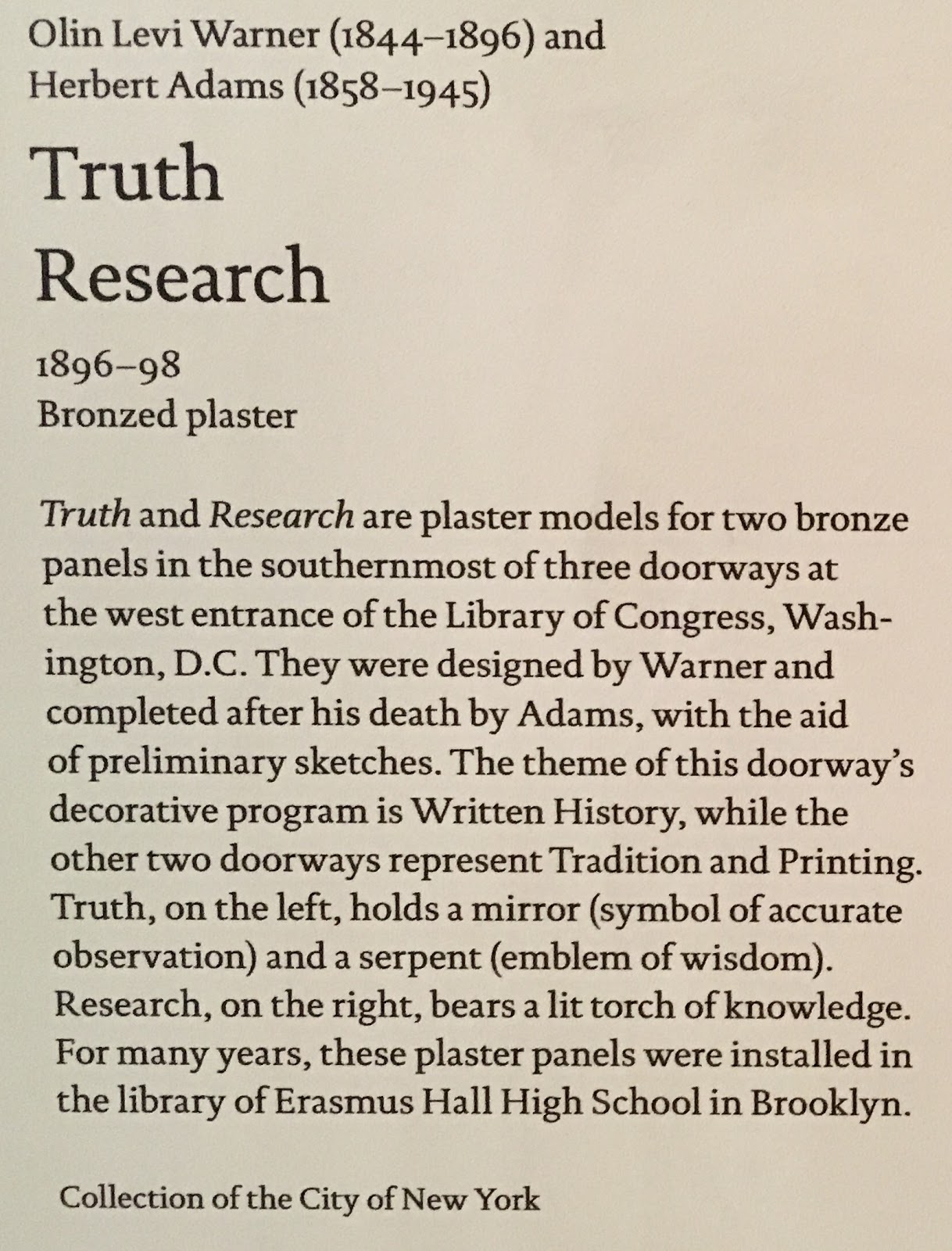
In a searingly emotional joint press conference held at their home in the Metropolitan Museum of Art, the embodiments of Truth and Research laid out a history of unrelenting abuse at the hands of many members of the Trump administration and Republican Party.  Their revelations are only the latest in a growing number of accusations of indecent, immoral, or illegal acts committed by members of this and previous administrations.

Speaking without a lawyer—as she pointed out, Truth needs no lawyer or explainer when she speaks plainly—but backed up by one of her half-sisters Clio, muse of History, Truth recounted in detail examples of President Donald Trump abusing and molesting her.  In a calm and unemotional voice, she described occasions on which Trump had violated her in full view of other elected officials, political appointees, the media, and the general public; indeed, she noted that these assaults were part of the public record.  As Clio nodded vigorously in agreement, she noted that these instances have been broadcast and reported widely, though not on all networks, noting that she has been effectively banned from speaking on Fox News.  She described the harm that had been done to her as damaging to her reputation, career, and even her very existence, noting that some have described the current era as “post-Truth,” as if she were dead. 

Clio then joined her half-sister on the podium and distributed annotated lists of all known events when Trump had violated Truth since he was sworn in as President.  The list was long; Clio pointed out that Trump violated Truth on average more than five times a day.  Truth then came back to the podium and made further charges, against members of the President’s administration and staff, saying that they had treated her no better, and indeed, that they had willingly assisted the President in violating her on a daily basis.  She cited the President’s Press Secretaries as a group as being particularly bad in this regard.  Clio drew the assembled reporters’ attention to video of former Press Secretary Sean Spicer talking about inauguration crowds and Presidential Advisor Kellyanne Conway introducing “alternative facts.”  Truth, visibly shaken, asked the assembled reporters to “make it stop.”  She then introduced her assistant, Research.

Research spoke very quietly, apologizing and explaining that her ability to speak clearly has been harmed, possibly permanently, by the current administration.  In fact, she said, many members of the administration “seem to have a thing for gags,” and that in the course of her employment she had been subjected to such humiliation with grim frequency.  The President, she indicated, seemed not to be actively harassing her; she hypothesized that it was simply that Mr. Trump was unaware of her existence.  However, she held him partly responsible for a workplace environment that enabled her abuse.  

President Trump was at fault, Research said, for appointing individuals well known for histories of assaulting, brutalizing, humiliating, and even torturing Research.  She cited as particularly appalling EPA administrator Scott Pruitt and the nominated USDA Chief Scientist Sam Clovis.  Research noted that she had never heard of Clovis before he was nominated and that he was “obviously totally unfamiliar” with her, but within minutes of their introduction, “it was clear he was into abuse and that business with the gagging.  EPA Administrator Pruitt has been exactly the same way,” perhaps even worse; again, Clio came forward and distributed printouts of  examples of torture resulting in permanent distortion and numerous instances of gagging, all part of the public record.  Clio, as she handed out the printouts, was overheard by some of the reporters present to be mumbling “do your goddamned jobs!”   

Supporting documents produced by Truth, Research and History showed that President Trump and his administration are intensifying a campaign against both Truth and Research of disregard, abuse, assault, and gagging engaged in by many previous Republican administrations for almost half a century, with then-Governor Reagan abusing both Truth and Research by blaming trees for air pollution.  

When asked for comment, Presidential Spokeswoman Sarah Hucakbee Sanders stated “These are just allegations.  Look at the accusers, and you’ll see.  I mean, look at the way they’re dressed, they are inviting it.  And besides, Truth has a well-known liberal bias, Research is often found at our liberal universities, and both Truth and Research have long histories of lying and producing fake news,” and asked reporters to simply watch the Fox News Network for more information.  

Monday, August 10, 2015

Authenticity and chance

What's not to like about a classical music riot?  Such disturbances have a long and rich history--warring claques in the world of opera, the legendary reception of Stravinsky's Sacre du Printemps, audience members begging the performers for mercy at a performance of Reich's Four Organs, and more.  The classical music riot is an appealing conceit, the topsy turned turvy, the highbrow descending to fisticuffs, the longhair resorting to hair-pulling.  And, I had the pleasure of attending one last week as a spectator.

It wasn't a big riot, for it wasn't a big concert.  Such fame as it receives will come only through this blog, and perhaps the pages of the Miskatonic University Herald.  I had been invited to that august institution by my friend, D. Avril Poisson, who has graced this blog before both in her capacity as microbiologist and as a musician.  I had recently discussed with her how, as an amateur, chance affects even my most intentional music-making, and not in a good way: I simply don't have the control over my digits that a professional does.  I expressed my displeasure with this, but she suggested that I take a broader view, and reminded me of the stimulation that chance provides the prepared ear--and invited the Real Doctor and myself to a concert by the Miskatonic Pro Musica Nova, contrasting the hyper-defined pianola music of Conlon Nancarrow and chance-driven aleatory music of John Cage.

Nobody riots for something they don't care about, so it's not that surprising that there have been so many classical music riots.  Classical music, serious music, whatever you may call it, is deeply cared about.  The music is the fruit of much effort and intention, and is meant to be treated as such.  Audiences know this, and don't want to be insulted by shoddiness.  On the other hand, when you are dealing with aleatory music of John Cage, it is hard to define what exactly is shoddiness and what is chance.  Cage wrote music guided by the chance and the i ching, and at the same time regarded these works as completely determinate.

At any rate, the concert opened with a set of pieces by Conlon Nancarrow.  The stage was empty of performers, save for a music student who started and stopped a player piano.  Hard to get less chancy than that.

Fittingly, the second half of the concert started with the famous 4' 33"  by John Cage, allowing us a space to open our ears.  Next on the program was Cage's Imaginary Landscape No. 4 from 1951*.  The piano for 4' 33"  was rolled off the stage, and a long table, 24 chairs, and extension cords were positioned at center stage.  Having surrendered to chance for the proceeding piece, I was preparing to enjoy what the universe served up next, as, per Cage's instructions, the student performers would adjust the volume and tuning knobs of radios according to the dictates of the conductor, the score and the i ching.  

The student members of the Miskatonic Pro Musica Nova marched on stage in pairs, holding their radios.  They were initially greeted with polite applause (and over-enthusiastic applause from one helicopter parent, embarrassing a blushing and cringing daughter), but there was also some murmuring and grumbling from one corner of the recital hall.  This built into hissing, and when the conductor strode onstage, he was greeted by a snake-pit of hissing and loud catcalls.

Someone once commented that the disputes in academe are so bitter because the stakes are so small.  So it may have been here--the Miskatonic music department is not large, and half of the music majors were on stage, nervously plugging in their radios as the front rows of the audience seethed with rage.  A group of the younger professors were yelling abuse at the conductor, accusing him of trampling over the intentions of Cage and dishonoring his spirit.  Clapping loudly and whistling and pounding on the stage, making as much noise as they could, they and their graduate students--who comprised the core of the Miskatonic Pro Musica Antiqua--were doing their best to stop the concert from going forward.  The rest of the faculty present (several of whom had heard John Cage and his students performing) were yelling at the others to sit down and shut up.

I couldn't really understand what the ruckus was about.  The words that boiled to the surface of the shouting were a jumble:  vacuum tubes, WFAN, transistors, living score, authenticity, Philco, kilohertz, Rush Limbaugh, and so on.  The Musica Antiqua crowd, led by a young visiting professor from Holland, seemed agitated by the very radios that were being used, while the Musica Nova crowd waved their scores with Cage's instructions at them.  Dr. Poisson, having had her share of brushes with the original-instruments crowd, watched the proceedings with a wry smile; the Real Doctor, who had visibly suffered during the Nancarrow and who does not care for Cage, seemed pleased that the concert had ground to a halt.  The students of the Miskatonic Pro Musica Nova squirmed uncomfortably in the chairs, radios at the ready.  The parents who had come to see their children perform screamed at all of the rioters to let things go on.  An elderly professor of viola whacked a theorbo specialist with a bundle of i ching sticks.  A young harpsichordist yelled loudly that the sound of John Cage must be protected at all costs, leapt onstage from the audience, ran into the wings and unplugged the radios.  Moments later, all the lights in the hall went out, and more screaming ensued.

The riot, such as it was, lasted five or ten minutes, and the lights were back on in short order.  The rioters agreed to let the concert continue, provided that they were permitted to read a statement from the stage.  Hastily written by agitated musicologists, committed to the ideals of musical authenticity, the statement insisted that the following piece was not by John Cage, but only derived from his ideas; that to hear the music of John Cage properly, radios using vacuum tubes playing 1950's pop music would need to be employed, and that nothing less would do.  Having finished reading this statement, the theorboist left the stage, exchanging the hairiest eyeball I've ever seen with the conductor, who gave as good as he got.  It was a satisfying riot, and also, a satisfying performance.  Was it music by John Cage?  I'll defer to Dr. Poisson, who opined, "whatever."

So I passed some time today by playing some of the most inauthentic music possible: an organ chorale prelude by Bach, transcribed for piano by Walter Rummel.  I wasn't even playing it on Rummel's preferred Hamburg Steinway, but instead on an even more inauthentic Japanese Kawai spinet.  So much for authenticity; what of chance?  As I noted to Dr. Poisson, I am an amateur, and don't have the control of my hands that I'd like.  The i ching is unnecessary to introduce random inputs from the universe into my playing; instead, a slight hesitation before the final phrase of the chorale was caused by a slight memory lapse.  The effect was esthetically pleasing, leading to a nice sense of conclusion.


*From the John Cage Website:  For this work, 2 performers are stationed at each radio, one dialing the radio-stations, the other controlling amplitude and timbre. Durations are written in conventional notation, relating to notes placed on a 5-line staff. The rhythmic structure of the work is 2-1-3, and is expressed in changing tempi. Cage uses proportional notation where 1/2” equals a quarter note. However, the notation is not entirely proportional, since accelerandos and ritardandos are still present in the score. The score provides indications for tuning (controlled by player 1), as well as for volume and tone color (controlled by the player 2). When listening to this work, one can’t predict what will be heard, which is exactly what Cage had in mind. In addition, the composition also functioned as a kind of exercise in abandoning preferences (Cage wasn't very fond of radios). As he put it in For the Birds: "I had a goal, that of erasing all will and the very idea of success." His method of composing here is basically the same as used in Music of Changes. Cage employed the I Ching to create charts, which were used to refer to superimpositions, tempi, durations, sounds, and dynamics. In these sound charts, 32 out of 64 fields are silences. In the charts for dynamics, only 16 produce changes, while the others maintain the previous situation. Similar charts were produced and employed for the other parameters. Cage gives an extensive description of his composing means for this work in his “To Describe the Process of Composition Used in Music of Changes and Imaginary Landscape No. 4” (Silence, pp. 57-60).

Saturday, January 3, 2015

Trend watch


I live out in the sticks, but I try to keep informed of the latest developments in tech and trends.  For this, I rely on a former colleague, L., who is still in touch with what’s hip and hot in the Bay Area and beyond.  And I am now informed of something that leads me to believe that [crotchety old man voice] this whole steampunk thing has gone too far. 

Everyone has a cell phone, everyone texts and tweets and twerps and what-all.   How to set yourself apart from, and above, the madding crowd, be steampunk, and still be connected?

Enter the cellular telegraph.  It’s a beautifully made brass and mahogany telegraph key that fastens on to, and plugs into, an i-phone.  An app called “dah-dit” converts your tappings into a signal that gets sent to a friend, whose dah-dit-equipped phone makes the noises that correspond to your dots and dashes.  They can then reply in Morse code.

Apparently, it’s gotten to be quite a thing among steampunk-y youth, and it’s easy to see why.  Like skateboarding, communicating in Morse is a trivial skill that takes copious time to get good at.  Like a high school clique, it excludes those that haven’t learned the code (not to mention parents).  Like a jeweled cell phone skin, the telegraph key attachment is expensive and casually flauntable.  And hey, it involves a cell phone.  So now, instead of being in the same room and texting each other, L. reports students in the same room telegraphing each other.  And apparently, as in days of old, people can recognize each other by their “accents” as they dot and dash. 

L.  reported a couple of classroom experiences interrupted by loud bursts of Morse Code and embarrassment on the part of an eccentrically dressed student fumbling to mute a cellular telegraph.  I suggested that L. should wait a year or so, and expect to see students waving semaphore flags at each other across the quad.

Sunday, November 16, 2014

Interesting mail

This was in the mail; I opened it before I realized it was addressed to a long-ago resident of our place.  I feel there's no harm in posting it, with a few redactions and the boring stuff at the end omitted.


URGENT MEDICAL DEVICE RECALL
“DREAMCATCHER” MODELS #4582BR-C, -D, -E, #4582BS-A, -B.

Dear [redacted]

You are receiving this letter because our records indicate that you may have purchased a defective and possibly dangerous item from one of our MegaCo stores.  We are voluntarily recalling Zhinghui Novelty Trading Company “Dreamcatcher” Models #4582BR-C, -D, -E, and #4582BS-A, -B sold in our stores between November 2013 and March 2014.  These models can be distinguished from previous and subsequent models of dreamcatchers sold in our stores by having only three feathers, located at positions corresponding to 3-, 6-, and 9-o’clock.  We recommend IMMEDIATE removal of these products from cribs, bedrooms, or any areas where sleeping may occur.

It has come to our notice that there are several manufacturing issues with the product.  The number of feathers is not sufficient to catch most bad dreams.  The feathers, despite assurances from Zhinghui Novelty Trading Company, are sourced from domesticated chickens and ducks, rather than free-living hawks and falcons.  Moreover, the persons manufacturing these objects were observed by our inspectors to have been in a negative frame of mind, often under intense stress from production quotas, and ill from glue-induced headaches.  The inspectors also noted the factory was polluted by a sense of guilt caused by the misappropriation and frankly crass commercialization of Native American sacred culture.

These manufacturing defects render these objects 45% less effective than placebo at preventing bad dreams or retaining good dreams.  The dreamcatchers subject to this recall are 93% ineffective at stopping dreams induced by eating Welsh Rarebit before bed.  Users have also reported dreams involving speeches before large audiences while wearing nothing but underwear, endless falling, unpleasant incidents in high school, and “that one with the giant spider, but it’s actually your boss, and she, you know, like, has you in a web, and you sorta wake up and your sheets are all tangled up, but you’re sorta asleep too, and then she turns into an evil clown-slash-Newt Gingrich, and he’s trying to sell you some Amway stuff…”  While there have been no fatalities associated with these products, we have reports of numerous bad dreams that have left a sort of “off” feeling for most of the day and a lingering jumpiness that can last for up to three days.

Due to the psychohazardous nature of this product, it is unlawful to dispose of it in municipal waste.  Defective products should be wrapped in three layers of heavy aluminum foil or contained in a leaden box and returned to the MegaCo store of purchase for a full refund and a voucher good for two sessions of either Freudian or Jungian psychotherapy at one of our convenient in-store clinics. 

The management of MegaCo sincerely apologizes for any adverse results of the use of this product.  However, due to malfeasance on the part of the Zhinghui Novelty Trading Company, MegaCo does not accept legal responsibility for any damage done by this product.  For further information, contact MegaCo legal departme…
 
...and so on.  I haven't forwarded it; at this time, the addressee's sleep is eternal, and, I hope, peaceful.

Monday, August 26, 2013

Monday Musical Offering Violins Violence edition

I have written here before about how wonderful Stradivari violins are, and how they have a hold on the popular imagination.  One thing that’s not well-publicized about them, and that I had no clue about until I was more thoroughly introduced to the world of lutherie, is that the “Stradivarius” instruments performed on today are quite different from what left Antonio’s shop back in the early 1700’s. 

The difference between the Stradivarius that left the maker’s hands three hundred years ago and the instrument played today is akin to the difference between a Model A Ford, fresh from the Dearborn assembly line, and a tangerine-orange-sparkle chopped and modded Deuce Coupe hot rod.  Some of the modifications to the violins are simply a matter of maintenance—cleats to repair cracks, or patches to make up for distortion from the sound post.  

However, most of the modifications affect the performance of the instruments.  Bass bars have been replaced—part of normal maintenance, but the replacements are generally much beefier than the original slivers of spruce.  The tailgut attachments would be unfamiliar to Antonio.  Fingerboards have been replaced by something narrower, longer, and lighter.  All necks are modern replacements: Cremonese necks were actually (*gasp*) nailed to the body of the violin, while new necks are mortised into place.  Also, the neck angle is quite different from what Stradivari installed.  In addition to such structural issues, almost all surviving fiddles have been polished and revarnished an unknown number of times. 

All this modification leads to instruments perfect for a modern style of playing, but they are not what their author intended.  There is a movement towards playing baroque music—the music of Stradivarius’ time—on instruments that have either been left in their original state, or newly made to baroque spec.  However, it’s hard to find great original instruments.  If an instrument was good, then its owners generally paid to have it kept up-to-date.  Those instruments left untouched were, frankly, not touched a whole lot to begin with.  Nonetheless, the original instruments movement has its dedicated, sometimes fanatical adherents.

This leads to an intriguing story.  I have to be circumspect in relating this, since it is something that is being actively kept out of the news by the request of the concerned parties.  I found out about it through a person I am at liberty to describe only as a well-connected-friend-of-a-luthier in the Eastern Hemisphere.  However, as a story of musical intrigue and deceit, it ranks with the recorded legacy of Joyce Hatto, and I think it ought to be public.  Such is life in the internet age; keeping secrets is impossible and trying is futile. 

One of the 20th century’s greatest violinists was Erika Morini.  A child prodigy, she had a shining career performing around the world until her retirement in the 1970’s, after which her star rapidly faded.  Since her 20’s, she played on a 1727 Strad, known as the “Davidoff.”  She kept the fiddle after her retirement, almost until her death in 1995.  At some time during her terminal illness, when she was on her sickbed, the Davidoff, along with much of her musical and artistic memorabilia, was stolen.  The case has never been cracked, and the Davidoff-Morini Strad, worth over $3.5 million, vanished. 

Until, maybe, now.  About a year ago, a nondescript box from a nonexistent address in Madagascar arrived at the Chei Mi Museum in Taiwan.  It contained a violin.  The body and scroll and label appear, by every test, to be those of the Davidoff-Morini.  Comparisons of the mystery instrument with the best available photographs match, scar for scar, tree-ring for tree-ring.  However, the fiddle has been modified from when it was last seen almost twenty years ago.  A proper Baroque fingerboard has been fitted, underneath gut strings and a lower bridge.  The neck has (with extraordinary workmanship) been replaced by one fitted in the ancient method.  In perhaps the most shocking and visible bit of work, the instrument has been completely revarnished, with no regard to preserving the few scraps of original finish—it was varnished as if it were a new instrument.  It is clear that incredible effort and skill had been used in restoring the Davidoff-Morini to its 1727 condition. 

No individual has taken responsibility for this bizarre un-theft and anti-vandalism, although there was a note accompanying the violin.  The note was a manifesto, in French, signed by the executive committee of the “Stradivari Liberation Front.”  My contact sent me some camera-phone pictures, but between my poor French and poor lighting I can only approximate the manifesto's contents.  It avers that the instrument is the Davidoff-Morini.  It goes on to cite the “atrocities committed by Vuillaume and his legion of ...[unclear]… race for louder and higher and brighter noise,” and the history of insults to “the master of all of us luthiers.” Apparently the goal of the SLF is to “acquire, by legal means or otherwise,” great classic instruments and “rescue them from abasement and slavery and restore them to their rightful [unclear: ?condition?].”  The note apparently urges the Chei Mi, as “responsible guardians of the heritage of the world” to treasure the violin and present it before the public, playing the music it was meant to play, played in the style it was meant to be played.

Needless to say, this has caused a deal of consternation, though it has been kept very hush-hush.  The instrument has not been displayed, nor played in public (my contact insists that it sounds incredible).  The insurers—and it’s not clear how they found out about the instrument—dryly maintain that it is the Davidoff-Morini, and since they paid the claim when it was stolen, they are the owners.  The Chei Mi has not acknowledged the incident, officially or unofficially, although I’m told they intend to keep the instrument as "a violin of uncertain provenance, attributed to Stradivari, acquired by anonymous gift."

What brings this to a head—where the story gets so good that my contact couldn’t keep silent any more—is the arrival of another nondescript box from a nonexistent address (this time in Suriname) at the Chei Mi Museum.  It contained, by every test, the 1734 “Ames” Stradivari, perfectly restored to “authentic” condition.  The “Ames” was stolen in 1981, and its last known owner, Roman Totenberg, died last year.  The violin came with another note from the Stradivari Liberation Front, hinting at more to come and naming some names, but only if the instruments were played in public as the SLF intended.  This could get interesting. 

Monday, May 27, 2013

Monday Musical Offering Frontiers in Lutherie Edition

I played a good Stradivari violin once, just for a few minutes. I’m a lousy violinist, but it was an amazing experience.  On the same occasion, I played a good Guarneri “del Gesu,” and it was equally amazing.  Now, every other violin is just not so good. 

This is one of the great problems of the violin-building world.  There are maybe a thousand or so of these exceptional old violins out there.  Their number can only decrease; they are getting more and more expensive (one recently sold for north of $18 million; the New York Times had to correct its initial report that it had sold for $18 billion).  There are some excellent modern makers out there, making some excellent violins for a fraction of that price, but if they are honest, they’ll concede that they are still chasing the old Cremonese makers.  Meanwhile, anyone owning one of these treasures gets increasingly nervous whenever they enter a taxi or relinquish their instruments to the TSA. 

Modern luthiers have tried all manner of tricks to match the old masters.  Some claim to divine mathematical and geometrical formulae from the shapes of the old violins.  Some “tune” their fiddles by watching the patterned dance of iron filings as they blast the wood with amplified sound.  Some find markings in the wood of these old fiddles and from these scratches extrapolate whole systems of woodworking. Several Cremonese fiddles have been so thoroughly studied, by CT scans, X-rays, UV imaging, density mapping, frequency mapping, dynamic FLIR, HPLC analysis—as to become open books. 

Then there are the dilettantes, techies with their particular tools.  Every year, like clockwork, one solves the “Secret of Stradivari.” It’s propolis in the varnish!  It’s wood soaked in the river Po! It’s fungus! It’s pollen in the varnish!  It’s wood from trees grown during the “little ice age”! Strangely, these discoveries have done nothing to change the status quo: Strads are still Strads, and everything else is still everything else. 

I write this as an introduction to an enlightening and confounding conversation I had, which I attempt to document here.  The Real Doctor and I attended a performance by the Miskatonic Pro(-Am) Musica.  The program was conventional, and the performance was what might be expected from a mixture of professionals and enthusiastic amateurs.  One of those amateurs is Dr. D. Avril Poisson, a biologist of some note.  Dr. Poisson’s fiddle was extremely unusual, and as the Real Doctor and I are students of lutherie, we sought her out after the performance, and she graciously talked with us (she apparently is aware of my having provided her with some favorable publicity). 

In its form, Dr. Poisson’s fiddle was classic—the front had deep arching and a well-formed recurve, very much in the earlier Cremonese style; the outline, scroll, and f-holes also were suggestive of the Brescian school.  The most obvious thing about the fiddle, though, was its color.  Except for the strings, pegs, and bridge, it was a pale, semi-translucent milky hue, made of some well-polished plastic shot through with fine blue streaks.

“You may not believe it,” Dr. Poisson said, “but this is”—she emphasized the word to prevent any argument—“a 1709 Rogeri, the ‘Miskatonic.’”  She played on it a bit (with a wooden bow), and it sounded fantastic. 

I would no more ask a performer if I could borrow their fiddle for a moment than I would ask to borrow their spouse for a romantic tryst—but she insisted that both the Real Doctor and I play it, and we both found it to be an amazing instrument.  I’ve never played a Rogeri before, and maybe I didn’t then, but I did play an instrument that was fully the equal of the great old fiddles I’d sampled. 

While both the Real Doctor and I were dumbfoundedly playing her fiddle, Dr. Poisson was smiling like—well, the best reference I can think of is the Man in Black during the swordfight in The Princess Bride.  She opened up a double case, revealing another milky, blue-streaked fiddle.  “This is also the 1709 Rogeri,” she said, and urged us both to play it.  The feeling was uncanny.  It was like meeting a person so remarkable that they must be unique in all the world—then being introduced to their identical (and identically remarkable) twin.  “There are three more 1709 Rogeris back at Miskatonic that play exactly like these, and we’re making one every three weeks.”

Neither the Real Doctor nor I said much that was coherent, just a string of fragmentary questions, while Dr. Poisson beamed.  “This is actually the debut concert for this fiddle, which is odd given that it’s 1709.  It hasn’t been officially revealed, but I suppose now that you’ve seen it you’ll blog about it, and I want to make sure the story is straight.  First, you’ve got to give most of the credit to Dr. Barry O. Lodge of the Materials Science department at Miskatonic University.  I am, if you will, second to last author, and there are a dozen or more engineering students in front of me.”

“You know the Betts Project?” she asked.  (This is an effort by a well-known group of luthiers to use the latest technology to make a perfect replica of the Library of Congress’ 1704 “Betts” Stradivarius.  High-precision CT scans of the instrument are used to make a stereolithographic computer image of the violin, and this is fed into a CNC wood carving machine, producing a precise replica down to fractions of tenths of millimeters.  “That’s just cargo-cult lutherie—they think that if they replicate the form, they’ll replicate the magic, just like some stone-age Polynesians making detailed replicas of landing strips and hoping some airplanes full of goodies will arrive.  If they don’t capture that magic, it’s because they’ve failed to copy the form precisely enough.  Well, those cargo-cultists at Oberlin have made an agreeable violin, but it’s not the Betts.”

“See, they’ve got the shape as close as can be, but they don’t have the exact same piece of wood, with the exact same grain and imperfections and density and hardness variations, and they’re using some modern varnish that has its own differences in hardness and whatnot.  It’s the way the sound energy travels through the wood that makes the Betts what it is.  I’ve no doubt that the masters of Cremona were sensitive—maybe on some subconscious level, maybe as the result of years of experience with wood—to those subtleties, and this stupid Betts Project just ignores it.  I mean, they try to match the wood’s appearance, but really, they just have a Betts-shaped box, and it’s not like it’s any more affordable for a promising young student.

“So, Barry O. Lodge was working on extending the abilities of 3D printing, and he’d found that the community had basically run into the same wall as the Betts people—extraordinarily high fidelity replication of shape, complete ignorance of micro-scale variation in mechanical properties.  It’s funny, the Betts people got there reductively, by milling away wood, the 3DP people got there additively, by cementing together microscopic particles of resin.  Anyway, he has discovered a way to accurately measure mechanical properties like hardness, density, sound velocity, and so on at a 10th of a millimeter scale.  Scanning takes forever, and the files are huge, but you really have the soul of the thing.

“If the soul is in the mechanical properties, I suppose,” interjected the Real Doctor, “but…”

Dr. Poisson pointed at the “Rogeri” in the Real Doctor’s hands. “That is an instrument,” she said, “a tool for making art.  Its soul is its unique voice, its ability to produce music, at which it has few equals.” 

I was examining the other “Rogeri.”  The purfling was a faint line of light grey around the edges.  Inside, there was a slight elevation where the label would be, as if a slip of parchment had been embalmed in resin.  The visual effect left me feeling very uneasy.  Wood was once alive, and bears time’s traces on a growing tree; the parchment in a fiddle is signed by the hand of the maker.  The visual impact of this instrument, which sounded so lovely and lively, gave me the creeps—a dead thing, mummified in plastic.  I handed it back to Dr. Poisson with some relief.  “So, from file to fiddle?” I asked.

“3D printing taken to a new level.  It’s all wrapped up in engineering and patents.  I don’t understand most of it, and what I might understand, I’m not allowed to know for legal reasons.  The chemistry is appealing, doping the resin with aligned, tuned nanotubes and other super-secret stuff to give it exactly the right mechanical properties on a micrometer-by-micrometer scale.  The resin is proprietary, but it’s the reason for the sickly color, and some of the dopants are blue, so that’s why the streakiness.  I really don’t love the visuals, but we can’t fix it yet.  The printer has replicated the mechanical properties of the varnish exactly, and adding any tint will screw up everything.  So I play with my eyes closed, and I’m playing the Rogeri.”  Which she did for us, again, and it still sounded wonderful—but I had to close my eyes. 

When she had stopped, I asked,  “Dr. Lodge wasn’t working on all this for lutherie, was he?”

“Goodness no,” she answered   "He’s an engineer, so he was doing this because it seemed hard but possible.  He presented a summary of this work at a symposium, and was looking for ideas.  He was thinking of tools and ornithopter drones, but I suggested fiddles would be a real test.”

The Real Doctor had been studying the “Rogeri” with her usual intensity, and didn’t break her gaze on the instrument when she asked, “The soundpost—is it of one piece with the instrument?  And, how does it sound side by side with the real Rogeri?”

Dr. Poisson smiled, and corrected the Real Doctor.  “This is the real Rogeri, and so is that one there.  It’s one piece, everything printed in one go but the fittings.

“Of course, the Rogeri wasn’t the first thing Barry and I tried.  We wanted to prove the concept on a more modest scale, so we chose a couple of modest student-level instruments—ones that had noticeable character, though not always good.  I played on them, day in and day out, for a couple of months.  The sacrifices we make for science!  I didn’t like them, but I could recognize each of them easily, even in a crowd.  Barry scanned and printed them, and we had the luthier string them up, and they were perfect clones—every annoying flaw and shortcoming, and even the few nice things, had been replicated.  Can you imagine what a boon it will be, when every student of the violin can play a really good fiddle—this, or the “Vieuxtemps” or the “Viotti” or their like—instead of fighting against some atrocious Chinese factory box?”

“Yeah, we’re facing the same thing right now with our nephews,” answered the Real Doctor.  She was starting to look a little worried, and looked at the “Rogeri” as if it might bite her.  “But how does this” she said, giving the grey-blue fiddle back to Dr. Poisson “sound side-by-side with the real Rogeri?”

Dr. Poisson’s dislike of the emphasis on “real” was visible, but, with a shrug, she put her fiddle back in the double case next to its twin.  “Well,” she said, “you can try for yourself.  We still haven’t told the regents of the university, who own the original.  I told them with perfect honesty that I am traveling with the ‘Miskatonic’ Rogeri.”  She rummaged through a travel case, and pulled out a Mason jar, three-quarters full of very fine, wood-brown dust, and offered it to the Real Doctor along with a bow.  “The scanning process is pretty hard on the original, but to me and Barry, that seems a fair price.”

Monday, February 25, 2013

Monday Musical Innovation


I have to admit that I’ve never loved the “historically informed performance” movement.  This is the whole scheme of playing the music of the Baroque and Classical eras, on musical instruments of that era, in (what is supposed to be) the style of that era.  The movement is about as old as I am, and become mainstream in the classical music world. I’ll concede that the “period performance” movement has had a corrective effect on some 20th century excesses.  However, I still prefer Bruno Walter’s Beethoven to Norrington’s, and Szerying’s Tartini to Wallfisch’s.  But, a recent scientific breakthrough may lead me to change my mind.

To be completely honest, I’ve got several problems with the “authenticity” thing.  Some minor issues are that I just don’t think Locatelli was that great; that the players usually play too darn fast; that vibrato is, in fact, a good thing, and so on.  There’s a larger philosophical issue—we simply can’t recreate 18th century performance style.  The 20th century is a complete anomaly in the history of humanity and music, in that sound (and performance practice) is no longer ephemeral, but the performances of Mozart and Bach—the sounds they made—are lost forever. 

However, the biggest problem I have with “authenticity” is the instruments.  I simply don’t like the way they sound.  I hate the timbre of the harpsichord, and “fortepianos” sound like John Cage’s “prepared” pianos and can’t stay in tune.  I’ve played excellent baroque violins, and they’re interesting, but there are reasons that just about every Strad and Guarneri and Amati has been modified to modern spec and played with a modern bow.  To my ears, authentic instruments don’t sound good, so imagine my surprise when I found that problem is with my ears, or what’s around them.

A really neat paper came out recently about the interplay of acoustics, acoustical aesthetics, and fashion.  The lead author, D. Avril Poisson, is more noted as a researcher in the biological sciences, but like the noted geneticists Jacques Monod and James Crow, she is an accomplished amateur string player.  Like me, she had always been irritated by the sound of “period” instruments, and like me, she had always assumed the problem was with the unique timbre of the instruments—their signature collection and arrangement of overtones.

The bolt of lightning that inspired her to change her mind was quite literal: it fried a transformer at an electrical substation near her workplace, Miskatonic University, one evening last winter. Dr. Poisson is as dedicated to her art as she is to her science, so the evening’s rehearsal of the Miskatonic Pro(-Am) Musica went on according to schedule, in a chilly room lit by candlelight.  Dr. Poisson found herself wearing a sort of hunter’s cap with earflaps and LED lights in the visor so she could read her score, and found that her viola sounded radically different.  The ear flaps, though they did not cover her ears, seemed to amplify certain frequencies of sound from her viola and quench others, and her modern instrument took on a radically different character.

As soon as she could, Dr. Poisson borrowed one of her fellow enthusiast’s violins—a 2003 reproduction of an Andrea Amati in its “original” condition with gut strings and a baroque bow, and played it with a variety of headgear, ranging from the hunter’s cap to a sombrero.  Although, to her ears, the fiddle never sounded great, it sounded quite different with each topper—different enough to spark a possible breakthrough in “authentic” practice.

Collaboration with Amy Vieuxtemps, a historian, and some creative work with a costumer provided Dr. Poisson with a variety of periwigs and perukes such as might have been worn in the time of Bach and Handel.  These all featured curls of stiffened wool immediately adjacent to the wearer’s ears, and unsurprisingly, radically altered the wearer’s impression of modern and baroque violins.  Dr. Poisson found, to her surprise and delight, that the annoying features of the baroque violin’s timbre vanished when she wore a gentleman’s wig of the late-17th century German style.  The fiddle sounded great. 

Dr. Poisson, a noted experimentalist, realized that this was an extremely subjective observation, and so, set about to gather some data.  She rigged up a manikin with microphones and a variety of wigs, and collected sound spectra of several modern and baroque violins.  She was able to identify certain clusters of tones that the wigs filtered out, and others that they seemed to amplify.  The result was not surprising, given what anatomists knew about the effect of different shapes of bats’ ears on their sound perception.  Also, the result was robust enough that she developed a computerized filter that could be fed a digital waveform from a baroque violin, and would produce a “wigged” version of the sound.  In a blind survey of the 107 Miskatonic students enrolled in a music history class, 83 preferred the “wigged” baroque violin to the “naked” fiddle.  Similar results were obtained with a reproduction of a 1691 Flemish harpsichord, and the university’s prized 1780 Stein fortepiano.

There is some fodder here for historians of fashion.  Ornate wigs were absolutely required for men of any standing in society from the mid-1600s on.  Fashion, driven by royal vanity, is usually cited as one reason, along with the desirability of a shaven pate and removable hair in a milieu rife with head lice.  Along about 1800, such wigs rapidly become intensely unfashionable (outside of the English legal system).  Given the eternal nature of both royal vanity and parasites, the reason for the wig’s demise has long been a mystery. 

At the same time wigs were on the way out, Francois-Xavier Tourte revolutionized the design of the violin bow, giving the instrument much more power, and the violins of the Cremonese masters were having their necks replaced and strings tensioned.  John Broadwood was expanding the length and width of the piano, balancing the increased tension of the strings on a stronger, cast-iron frame, and harpsichords generally became kindling.

According to Poisson and her colleagues, this synchrony is no coincidence.  I have been taught that the interplay between composer/performer and instrument builder was a closed cycle: the musician wanted more powerful instruments, driving to the builder to make a more powerful instrument.  Then, the instrument maker built something with even more oomph, and the composer expanded his vision to encompass it.  Poisson suggests the radical hypothesis that this vicious cycle also killed the periwig, as, by 1800 its major use (according to her) was as an acoustic filter.  The itchy, unpleasant thing was no longer necessary and was summarily discarded.

Although fashion is constantly recycling old ideas and calling them new, it is unlikely that the clock will roll back far enough for the powdered periwig to re-enter the mainstream.  The fashion of playing the music of the Baroque on unimproved instruments is also unlikely to perish (especially since so much money has been invested in modern reproductions of these instruments).  I am always hopeful that I will be able to enjoy such performances, but must I go and get a wooly wig?

Not to worry.  Poisson, in conjunction with the global mega-instrument maker Yarnaha, has developed a product called “BarokEerz.”  These are a disposable, clip-on set of curls made of synthetic fibers that can be worn to any event featuring period performance practices.  The concept is on firm scientific, artistic, and financial ground.  Yamaha acousticians have confirmed that BarokEerz exactly replicate the acoustic effect of a periwig, and can even be specially tuned to maximize enjoyment of music from the early Baroque through the late classical period and account for variations between Italian, German, French, and English fashion.  Endorsements have been secured from a variety of the most pure-minded and rigorous period performers.  And, they are inexpensive enough that they can be included in the price of a ticket to any major concert venue.  I look forward to hearing the Baroque with fresh ears—or, though I shudder at the spelling, Eerz. 

Poisson, D. Avril, and Amy Vieuxtemps (2013).  Acoustic and Perceived Timbre-Modifying Effects of 17th-18th century Gentlemen’s Wigs.  J. Hist. Informed Perf. 33: 430-440. 

Kuc, R., (2010).  Morphology Suggests Noseleaf and Pinnae Cooperate to Enhance Bat Echolocation.  J. Acoust. Soc. Am. 128 (5): 3190-3199. 

Poisson, D. Avril, and Bella Sone (2013).  Wigger: A Software Package for Modernizing Ancient Instruments.  Proc. Southeast. Indiana Acoust. Soc. (A), 12: 72-77.

Yarnaha (2013).  You’ve Never Heard Baroque Music Before—Hear It With New Eerz! [Press Release]